
Halal: The silent 'culinary revolution' reshaping South Korean tourism.
HalalGo Team
Verification Team • 1/6/2026
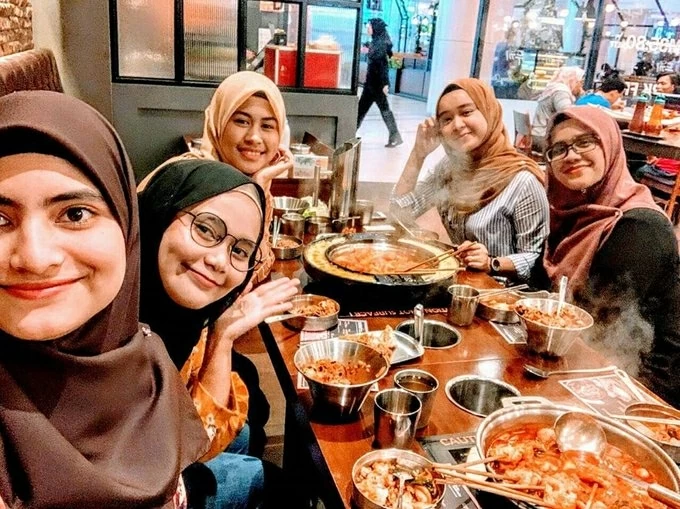
In the final days of 2025, a grilled fish restaurant near Sinchon Station in Seodaemun District (Seoul) is packed with customers, leaving no empty seats. Among the roughly 40 diners present, most are Muslim tourists wearing hijabs. Pointing decisively at the pictures on the menu, they place their orders and excitedly exclaim “Terbaik” (“the best”) as dishes such as grilled mackerel, Spanish mackerel, and spicy stir-fried squid are served.
The restaurant was once a familiar spot for university students. However, after being widely recommended within the Muslim travel community as a “Halal-friendly” destination, its customer structure has completely shifted: revenue from foreign customers now accounts for as much as 70% of total turnover.
Halal is increasingly becoming a new consumer standard, reshaping Korea’s tourism-oriented food service market.
This transformation has unfolded alongside a sharp rise in Muslim visitors. According to the Korea Tourism Organization, the number of Muslim tourists increased from 360,000 in 2022 to 800,000 in 2023, reaching 1.03 million in 2024. As of October 2025, the figure has already reached 998,000, suggesting that Korea may surpass the one-million mark for the second consecutive year.
Along with the growth in numbers comes a clear shift in consumption behavior. Previously, Muslim tourists tended to cluster in Itaewon to eat kebabs or lamb dishes. Today, they actively seek out Korean restaurants that meet Halal standards—from ingredients and preparation methods to service spaces.
In a context where South Korea has only around 15 restaurants officially Halal-certified by the Halal Committee of the Korea Muslim Federation (KMF), Muslim tourists increasingly rely on social media and food-travel apps to share reviews and guide one another. Restaurants that avoid pork and alcohol, prioritize seafood and vegetables, or use plant-based substitutes have quickly become popular destinations.
At around 1 p.m. on December 26 in Myeongdong, a Korean restaurant is crowded with Muslim tourists. Many families with young children line up along the staircase to order budae-jjigae and kimbap made without processed meat. A sign reading “Prayer Room Available” hangs on the wall—a small detail with significant impact in retaining this niche customer group.
Beyond traditional Korean eateries, Buddhist vegetarian cuisine has also become a familiar choice for Muslim tourists. In Insadong, women wearing hijabs line up in front of a restaurant marked “Vegan Restaurant,” ordering dishes such as soybean bulgogi rolls, shiitake mushroom wraps, and fried mushrooms served with apricot sauce. Staff member Song Taehyun notes that the restaurant also offers cooking classes specifically for Muslim guests interested in vegetarian cuisine.
Professor Jeong Ran-su from the Department of Tourism at Hanyang University observes that this trend reflects an important shift: “Muslim tourists’ consumption behavior is moving from a passive stage—limited to familiar foods—to an active stage of exploring and experiencing Korean cuisine within the framework of their religious standards.”
From an economic perspective, Halal is no longer merely a religious issue; it has become a cross-border consumer market with strong purchasing power and sustained growth.
Asia—home to over 60% of the world’s Muslim population—stands before a rare opportunity to turn Halal tourism into a new pillar of growth, especially as post-pandemic tourism competition intensifies.
According to international research organizations, global Muslim tourist spending has exceeded USD 200 billion annually and is expected to continue rising, driven by a young population, an expanding middle class, and the trend toward long-stay family travel. Crucially, these tourists spend not only on accommodation and transportation, but also on food, shopping, healthcare, education, and cultural experiences, generating broad spillover effects for local economies.
According The World and Vietnam Report.